
Wednesday, 11 May 2016

Thursday, 14 April 2016
The lie we live in...
What is stopping us from doing what we want to do, being what we want to be?
Are we really free? Are we really happy?
Wednesday, 13 April 2016
Food for thought: child labour
It refers to work that is mentally, physically, socially or morally dangerous and harmful to children. It usually interferes with their schooling either because they can't attend school or because because it obliges them to leave it prematurely.

Sometimes these children are illegally used for working in unhealthy sweatshops, making leather goods, clothes and shoes that are later shipped to all parts of the world. You can probably find them in almost every shop in your own town. So...
Do you think about child labour at all when you buy brands? Do you wonder about the hands that have made the clothes you are wearing? And do you think we get enough information about it? Think about it the next time you go shopping.
In this video, you can see the enormous contrast between what life is like for children from different parts of this utterly unfair world. You can read the lyrics of the song by Radiohead below.
Radiohead: All I Need
I'm the next step
Waiting in the wings
I'm an animal
Trapped in your hot car
I am all the days
That you choose to ignore
You are all I need
Youre all I need
I'm in the middle of your picture
Lying in the reeds
I am a moth
Who just wants to share your light
I'm just an insect
Trying to get out of the night
I only stick with you
Because there are no others
You are all I need
Youre all I need
I'm in the middle of your picture
Lying in the reeds
It's all wrong, it's all right
It's all wrong, it's all right
It's all wrong, it's all right
It's all wrong, it's all right
It's all, it's all
Tuesday, 29 March 2016
DESCRIBING A PAINTING - ART AND VISUAL EDUCATION - 1ESO

- Take a close look at the painting, study it carefully and think about what makes it important or special. What calls your attention? Why have you chosen it?
- Decide how to structure your description; draw a diagram with the ideas you are going to include. This is a basic outline:
1. INTRODUCTION:
The name of the painting is…
It was painted by…, in… (place and year)
The style/movement it represents is… (realism/impressionism/surrealism/cubism…)
The size of the painting is…
We can see it in/It is displayed in…
2. THE ARTIST
When and where was he/she born?
Do you lnow anything about his/her education and ideas?
Is there any important event in the artist's life that is relevant when we talk about this work in particular?
3. DESCRIBE WHAT YOU SEE AND WHERE IT IS IN THE PAINTING:
What can you see?
Is it a landscape, a portrait, a still life, an abstract painting…?
The painting shows/depicts/represents...
The scene takes place in...
We can see...
There is/are...
In the foreground/background...
In the middle/In the centre...
At the top/At the bottom...
On the left/On the right...
Between/Behind/In front of/Next to…
The atmosphere is relaxing/peaceful/depressing/bleak...
b. Colours:
We can see cool/warm/bright/loud/dark/delicate...colours.
c. People:
Are there people in the painting? What do they look like? What are they wearing? What are they doing? What is happening?
d. Style, techniques and visual elements:
Materials: oils, watercolours, canvas, paper...
Lines, shapes, brushstrokes, light, texture, composition...
4. YOUR OPINION:
I think…
In my opinion…
It seems…
The painting makes me think of…
It reminds me of…
It makes me feel…
I like / don’t like this painting because…
It symbolizes…
It expresses…
It depicts...
Click HERE to see an example.
Click HERE to visit our Moodle course and find more information and extra practice.
Tuesday, 16 June 2015
2 ESO - June revision handout: answers
Questions:
1. What is Arnold S. like?
2. How old was your father when he met your mother?
3. How often does she tidy her room?
4. What does she have for breakfast?
5. Why is it difficult to be a farmer?
6. Is there a section with organic food?
7. Have you got any cheese?
8. Can we use our calculators?
9. What is there in the bag?
10. Who built a castle in Camelot?
11. What did King Arthur build in Camelot?
12. Where was Freddie Mercury born?
13. Were there many people at the show yesterday?
14. Why did they run away?
15. What was she doing when she met her teacher?
16. What were you doing when you saw it?
17. What is the most dangerous sport?
18. What are those scientists going to do?
19. Who is going to build a spaceship to get to the Moon?
20. Why is it going to be difficult?
21. Who is she talking to?
22. When is your plane leaving?
23. What will happen if she doesn't call you?
24. Will I marry an attractive man?
25. When will I finish my university studies?
Translation:
1. Sally is 14. She was born in Ireland and she lives in Dublin. She is medium-height and she has got curly red hair. She goes to school by bike / she rides a bike to school every day.
2. Who washes the dishes after dinner? My father washes the dishes, and I help him if I have time.
3. How often do you watch the news? Twice a day, while I am having breakfast and after dinner.
4. Is your brother doing the ironing? No, he is taking the rubbish out. He'll be back in two minutes. Call him later.
5. Is there any bread? No, we need bread and a dozen eggs. Can you go to the supermarket? I have to send an email. Of course, where is it? It's near, opposite the fishmonger's. How much money is there in the wallet? There's 50 euros.
6. What did you do last weekend? I went to France. Our plane took off at eight and two hours later we landed in Paris. When we arrived we went to a restaurant for dinner. The city is beautiful. You have to go there.
7. Why was your sister crying yesterday? She was very sad because her best friend is going to move to a different city next Monday.
8. Some people think that skiing is the most difficult sport. In my opinion, it is easier than climbing or surfing.
9. Get your suitcase. We are going to get off the train at the next stop.
10. What are you going to do tonight? I don't know. I think I will stay at home. But tomorrow I am going to the beach.
11. In the future we will work less hours because robots will do all the work.In 30 years, there will not be nuclear weapons and people will live in peace.
1. What is Arnold S. like?
2. How old was your father when he met your mother?
3. How often does she tidy her room?
4. What does she have for breakfast?
5. Why is it difficult to be a farmer?
6. Is there a section with organic food?
7. Have you got any cheese?
8. Can we use our calculators?
9. What is there in the bag?
10. Who built a castle in Camelot?
11. What did King Arthur build in Camelot?
12. Where was Freddie Mercury born?
13. Were there many people at the show yesterday?
14. Why did they run away?
15. What was she doing when she met her teacher?
16. What were you doing when you saw it?
17. What is the most dangerous sport?
18. What are those scientists going to do?
19. Who is going to build a spaceship to get to the Moon?
20. Why is it going to be difficult?
21. Who is she talking to?
22. When is your plane leaving?
23. What will happen if she doesn't call you?
24. Will I marry an attractive man?
25. When will I finish my university studies?
Translation:
1. Sally is 14. She was born in Ireland and she lives in Dublin. She is medium-height and she has got curly red hair. She goes to school by bike / she rides a bike to school every day.
2. Who washes the dishes after dinner? My father washes the dishes, and I help him if I have time.
3. How often do you watch the news? Twice a day, while I am having breakfast and after dinner.
4. Is your brother doing the ironing? No, he is taking the rubbish out. He'll be back in two minutes. Call him later.
5. Is there any bread? No, we need bread and a dozen eggs. Can you go to the supermarket? I have to send an email. Of course, where is it? It's near, opposite the fishmonger's. How much money is there in the wallet? There's 50 euros.
6. What did you do last weekend? I went to France. Our plane took off at eight and two hours later we landed in Paris. When we arrived we went to a restaurant for dinner. The city is beautiful. You have to go there.
7. Why was your sister crying yesterday? She was very sad because her best friend is going to move to a different city next Monday.
8. Some people think that skiing is the most difficult sport. In my opinion, it is easier than climbing or surfing.
9. Get your suitcase. We are going to get off the train at the next stop.
10. What are you going to do tonight? I don't know. I think I will stay at home. But tomorrow I am going to the beach.
11. In the future we will work less hours because robots will do all the work.In 30 years, there will not be nuclear weapons and people will live in peace.
Sunday, 28 September 2014
Clothes
This mindmap will help you revise some basic words that we use to describe clothes:

Describing clothes video lesson:
Some adjectives that we use to describe clothes:
PRACTICE:
1. Clothes: multiple choice
5. Listening: Shopping for clothes
6. Clothes quiz: Write your answers on a separate piece of paper. Work in pairs, and be quick!!
Wednesday, 24 September 2014
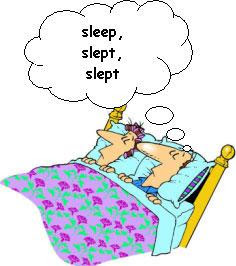
Irregular Verbs:
Do you find it difficult to study the list of irregular verbs in English? This link may help you remember some of them: IRREGULAR VERBS HELP
And you can find and download the list you must study this year here.
Subscribe to:
Posts (Atom)