Showing posts with label grammar. Show all posts

Sunday, 1 December 2019

PRESENT PROGRESSIVE / CONTINUOUS


When do we use the present progressive?


How do we form the present progressive?


And how do we make negative and 
interrogative sentences?


PRECTICE
1. Present continuous practice 1
2. Present continuous practice 2.

Present simple or present continuous? Challenge.


Sunday, 10 November 2019

PRESENT SIMPLE


                         USES OF THE PRESENT SIMPLE


Resultado de imagen de present simple WOODWARD


We have already revised the verbs "BE" and "HAVE GOT" in the pressent simple.
Before we move on, remember:


FREQUENCY ADVERBS

Resultado de imagen de FREQUENCY ADVERBS

Adverbs of frequency - Practice


Monday, 27 May 2019

Comparative and Superlative


REMEMBER:


COMPARATIVE: 
(MORE+ADJECTIVE / ADJECTIVE-ER) + THAN...
                           
    Lions are more dangerous than elephants.
      Elephants are heavier than lions.


SUPERLATIVE: 
THE + (MOST+ADJECTIVE / ADJECTIVE-ES) + IN/OF...


     Lions are the most powerful animals in the jungle.


        Lions are the biggest of those four animals.


HOW DO WE KNOW IF WE NEED 
MORE/MOST OR -ER/-EST?
It depends on the adjective:


PRACTICE

5. Complete. (Includes "as... as" and "so... as".)


Tuesday, 14 May 2019

I am going to... Plans fot the future.


SOME EXAMPLES...


We use the going to-future:


1. To talk about planned actions in the future:

We are going to have a party tonight.
They are going to fly to Las Vegas next week.

2. To predict something when we are sure it is going to happen because it is a logical consequence of what we see:

Look at that car!
It is going to crash into the yellow lamp post! Resultado de imagen de going to form


PRACTICE

Going to: Statements


Going to:  Questions 

Going to: Mixed

Tuesday, 9 April 2019

PAST SIMPLE OR PAST PROGRESSIVE


PRACTICE:

1. Choose the right tense to complete the sentences.

GAMES:


BIOGRAPHIES
HENRY VIII


Search the web and answer:


1. Who was he?
2. Where and when was he born?
3. Who were his parents?
4. How old was he when he became king?
5. How many times did he marry?
6. What happened to each of his wives?
7. How many children did he have?
8. When and how did he die?

Reference:

The fascinating life of Henry VIII. 
Henry VIII. Top 10 facts.
Henry VIII. Biography.


Monday, 8 April 2019

PAST SIMPLE: WAS WERE


WAS / WERE: GRAMMAR REFERENCE


Grammar game: WAS or WERE?


FAMOUS PEOPLE IN HISTORY 1:


Who were these people?
What were their jobs?
Where were they born?

Salvador DalĆ­
Antonio Vivaldi
Eduardo Chillida
Thomas Edison
Nelson Mandela


FAMOUS PEOPLE IN HISTORY 2:


PRESENT PROGRESSIVE


Watch the videos. Then do the exercises below:


2. Present simple or present progressive?

To practise at home:

Monday, 11 February 2019

PAST PROGRESSIVE


2nd YEAR ESO
PAST PROGRESSIVE - INTRO LESSON


Watch the video to see some exemples of this tense and learn how it is formed.


1. EXTRA REFERENCE

Monday, 8 October 2018

Pronouns and Possessives


POSSESSIVE PRONOUNS AND POSSESSIVES ADJECTIVES:


SUBJECT PRONOUNS AND OBJECT PRONOUNS


PRACTICE:

1. Choose the correct option  Possessive adjectives and pronouns.
2. Complete the sentences. Possessive adjectives and pronouns.
3. Complete the sentences. Object pronouns.
4. Choose the correct personal pronoun.

Sunday, 3 June 2018

Modal Verbs: Practice


Modal Verbs: Practice

1. CAN and COULD 
2. CAN / COULD 2
3. CAN / CAN'T / COULD / COULDN'T
4. COULD I / COULD YOU?
5. MUST / MUST NOT
6. SHOULD / SHOULDN'T


MODAL VERBS IN SONGS

Translate these sentences:

1. No puedo sacarte de mi cabeza.
2. SĆ© que puedo ser lo que quiera ser.
3. No debes llorar.
4. El espectƔculo debe continuar.
5. DeberĆ­a quedarme o deberĆ­a marcharme?

Then watch the video and check your answers.


Modals: Structure and Use.


ESTRUCTURA

- Los modales van seguidos por un infinitivo sin “to”.

- No llevan –s en la tercera persona.

- Funcionan como auxiliares, asƭ que no van acompaƱados de otros auxiliares en las oraciones negati
vas o interrogativas. 

     I can speak English (NOT: I can to speak English). 
     She can speak Spanish. (NOT: Shee cans speak Spanish).
      I can’t speak Spanish (NOT: I don’t can speak Spanish).


ORACIONES NEGATIVAS: 

SUJ + MODAL + NOT + INFINITIVO

     You must not /mustn’t walk on the grass.
     He cannot/can’t speak Arabic.
     We should not / shouldn’t be late.
PREGUNTAS: 

MODAL + SUJ + INFINITIVO

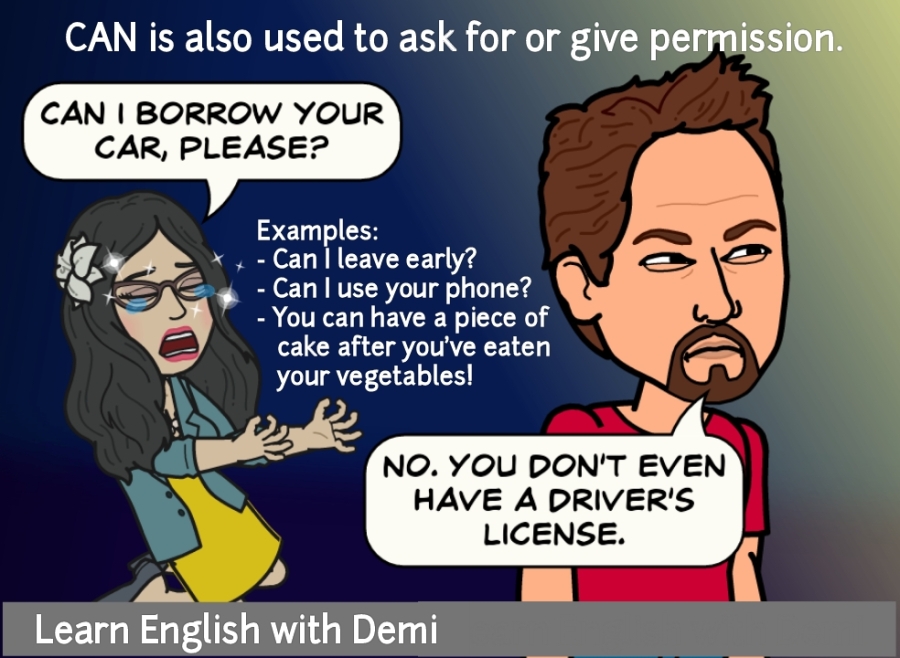
      Can I have another piece of cake please?
      Should I stay with her?


Modals: Translate the examples


TRANSLATE THESE EXAMPLES

Resultado de imagen de can MODAL COMIC


Resultado de imagen de COULD MODAL COMIC


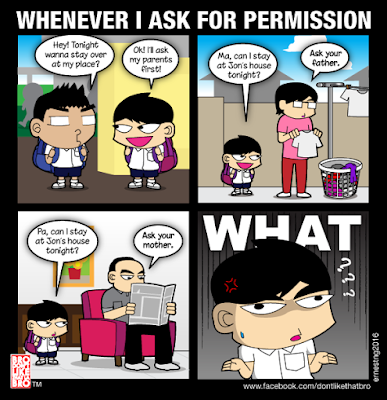
     Resultado de imagen de can permission COMIC

Resultado de imagen de can MODAL COMIC

Resultado de imagen de can permission COMIC

Resultado de imagen de can MODAL COMIC


PRACTICE

1. Choose the right option: can, can't, must, mustn't, should shouldn't


Sunday, 6 May 2018

Comparative and Superlative


REFERENCE:

- Los adjetivos en grado comparativo y superlativo. Reference in Spanish.

- Comparatives and Superlatives: Video Lesson.


PRACTICE:

1. Comparatives and Superlatives Quiz.
2  Quiz.

5. Fill-in exercise


LET'S PLAY: COMPARATIVES AND SUPERLATIVES GAME:


Tuesday, 3 April 2018

FUTURE TENSES IN ENGLISH


WILL-FUTURE

- Reference.
- When do we use WILL?

- Will- future: form.
- I will follow Him (Sister Act): Listen and complete.


I will follow Him
Follow Him wherever He may
And near Him, I always will
For nothing can keep me away
He is my

I will follow Him
Ever since He touched my heart I
There isn't an too deep...
A so high it can keep,
Keep me away,
Away from His

I love Him!
I love Him!
I love Him!
And where He goes,
I'll follow!
I'll follow!
I'll follow!

I will follow Him...


Remember that WILL is not the only tense that we use to talk about the future. We can also use de expression GOING TO, the PRESENT CONTINUOUS, and even the PRESENT SIMPLE. The following links will help you choose the right one:

- Differences between will and going to.
- Future tenses: reference and practice. 


PRACTICE

1. Tenses to talk about the future: choose the right answer 1

2. Tenses to talk about the future: choose the right answer 2

3. Complete the sentences using the correct tense of the verbs in brackets.

Monday, 26 February 2018

PAST PROGRESSIVE: REFERENCE AND ONLINE PRACTICE


PAST PROGRESSIVE


Listen to some examples:


Past Progressive Picture Game: Can you guess what they were doing?


What were the people in the town doing yesterday at nine o'clock in the morning?
What happened then?


What were the people in the video doing when the blackout happened?


 PAST PROGRESSIVE: REFERENCE AND PRACTICE


Sunday, 7 January 2018