Questions:
1. What is Arnold S. like?
2. How old was your father when he met your mother?
3. How often does she tidy her room?
4. What does she have for breakfast?
5. Why is it difficult to be a farmer?
6. Is there a section with organic food?
7. Have you got any cheese?
8. Can we use our calculators?
9. What is there in the bag?
10. Who built a castle in Camelot?
11. What did King Arthur build in Camelot?
12. Where was Freddie Mercury born?
13. Were there many people at the show yesterday?
14. Why did they run away?
15. What was she doing when she met her teacher?
16. What were you doing when you saw it?
17. What is the most dangerous sport?
18. What are those scientists going to do?
19. Who is going to build a spaceship to get to the Moon?
20. Why is it going to be difficult?
21. Who is she talking to?
22. When is your plane leaving?
23. What will happen if she doesn't call you?
24. Will I marry an attractive man?
25. When will I finish my university studies?
Translation:
1. Sally is 14. She was born in Ireland and she lives in Dublin. She is medium-height and she has got curly red hair. She goes to school by bike / she rides a bike to school every day.
2. Who washes the dishes after dinner? My father washes the dishes, and I help him if I have time.
3. How often do you watch the news? Twice a day, while I am having breakfast and after dinner.
4. Is your brother doing the ironing? No, he is taking the rubbish out. He'll be back in two minutes. Call him later.
5. Is there any bread? No, we need bread and a dozen eggs. Can you go to the supermarket? I have to send an email. Of course, where is it? It's near, opposite the fishmonger's. How much money is there in the wallet? There's 50 euros.
6. What did you do last weekend? I went to France. Our plane took off at eight and two hours later we landed in Paris. When we arrived we went to a restaurant for dinner. The city is beautiful. You have to go there.
7. Why was your sister crying yesterday? She was very sad because her best friend is going to move to a different city next Monday.
8. Some people think that skiing is the most difficult sport. In my opinion, it is easier than climbing or surfing.
9. Get your suitcase. We are going to get off the train at the next stop.
10. What are you going to do tonight? I don't know. I think I will stay at home. But tomorrow I am going to the beach.
11. In the future we will work less hours because robots will do all the work.In 30 years, there will not be nuclear weapons and people will live in peace.
Tuesday, 16 June 2015

Sunday, 28 September 2014
Clothes
This mindmap will help you revise some basic words that we use to describe clothes:

Describing clothes video lesson:
Some adjectives that we use to describe clothes:
PRACTICE:
1. Clothes: multiple choice
5. Listening: Shopping for clothes
6. Clothes quiz: Write your answers on a separate piece of paper. Work in pairs, and be quick!!
Wednesday, 24 September 2014
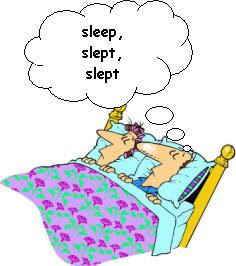
Irregular Verbs:
Do you find it difficult to study the list of irregular verbs in English? This link may help you remember some of them: IRREGULAR VERBS HELP
And you can find and download the list you must study this year here.
Tuesday, 1 October 2013
Passenger
Let her go
Well you only need the light when it's burning low
Only miss the sun when it starts to snow
Only know you love her when you let her go
Only know you've been high
When you're feeling low
Only hate the road when you're missing home
Only know you love her when you let her go
And you let her go
Staring at the bottom of your glass
Hoping one day you'll make a dream last
But dreams come slow and they go so fast
You see her when you close your eyes
Maybe one day you'll understand why
Everything you touch surely dies
But you only need the light when it's burning low
Only miss the sun when it starts to snow
Only know you love her when you let her go
Only know you've been high when you're feeling low
Only hate the road when you're missing home
Only know you love her when you let her go
Staring at the ceiling in the dark
Same old empty feeling in your heart
Because love comes slow and it goes so fast
Well you see her when you fall asleep
But never to touch and never to keep
Because you loved her too much
And you dived too deep
Well you only need the light when it's burning low
Only miss the sun when it starts to snow
Only know you love her when you let her go
Only know you've been high when you're feeling low
Only hate the road when you're missing home
Only know you love her when you let her go
And you let her go
And you let her go
Well, you let her go
Because you only need the light when it's burning low
Only miss the sun when it starts to snow
Only know you love her when you let her go
Only know you've been high when you're feeling low
Only hate the road when you're missing home
Only know you love her when you let her go
Because you only need the light when it's burning low
Only miss the sun when it starts to snow
Only know you love her when you let her go
Only know you've been high when you're feeling low
Only hate the road when you're missing home
Only know you love her when you let her go
And you let her go
HOROSCOPES AND PERSONALITY TRAITS
If you want to learn some words to describe people's personality, even if you don't believe in horoscopes, it may be a good idea to take a look at the adjectives that describe the qualities of the different horoscope signs. Find yours and make sure you know what they mean:


Monday, 17 June 2013
Revision exercises: Answer key
Hi pupils, sorry it has taken me so long! (I have included some extra transformations)
1º Bach – Revision
exercises - Answer key
1.
Complete the
sentences with the correct forms of the verbs in brackets:
1.
Jane did badly in the exam. She hadn’t studied (not / study) hard enough.
2.
Do you mind living
(live) in an uncomfortable flat? No, I don’t.
3.
Caroline has
lived (live) in Japan since 2001.
4.
Harry is on holiday. He is staying (stay) at a hotel next to the beach.
5.
My grandparents lived
(live) in Mexico between 1980 and 1991, then they came (come) back to Spain.
6.
- What are you going
to do (you / do) next Saturday? - I am
going to play (play) football in the morning.
7.
I can’t do my homework. I have lost (lose) my dictionary.
8.
I bought these trousers ten minutes ago. I have just bought (just / buy) them.
9.
My plane is leaving at 10.15, so at 10.15 I will be flying to France.
10. Do you like cleaning (clean) and tidying (tidy)?
11. Tom is a
businessman. He travels (travel) a
lot.
12. I haven’t finished (not / finish)
studying yet.
13. - Would you like to
come round and watch a film? – Sure, I will
bring (bring) something to drink.
14. Are you good at adapting (adapt) to different ways of
life?
15. Every summer my
family used to go (go) to the beach
when I was a child.
16. I don’t know what to
do this evening. I think I will stay
(stay) at home.
17. Ten minutes after he
had left (leave), his sister rang (ring).
18. Being (be) independent is important. Do you agree (you / agree)?
19. Where does Ben come from (Ben / come from)?
Australia. He’s Australian.
20. By 2040, mountain
gorillas will have become extinct.
2. Conditionals- Complete with
the correct tense:
1.
If I were
(be) a film star, I would make
(make) great movies.
2.
I have a driving test tomorrow. If I pass (pass) it, I will drive (drive) you to school everyday.
3.
Ben forgot to bring a map. If he hadn’t forgotten to bring (not / forget) the map, we wouldn’t have got lost (not / get lost).
b. Complete:
1. If Spain won the World Cup I would be very happy
2. If I had lost my mobile phone last week
I would have bought a new one.
3. Modals
Complete with a modal verb:
1. You mustn’t take photos
here. It is forbidden.
2. You needn’t wash up. I
have already done it.
3. - Shall I help you carry those bags? – Yes, thank you.
4. You shouldn’t eat so many
sweets. It is bad for you.
5. The lights are on: he must
be at home.
6. Can / could / will / would
you open that window, please?
7. She should have got up
earlier: she wouldn’t have missed the bus.
8. He could play the guitar
really well when he was only 5.
Passive:
1.
Our work was given to the teacher / The teacher was
given our work.
2.
The latest gossip has been told to him / He has been
told the latest gossip.
3.
I won’t be given a credit card.
4.
Loud music is being played.
5.
The reporter shouldn’t have been given that
information.
Write the questions:
1.
How many photos did
they take yesterday? They took thirty photos yesterday.
2.
How often do you go
to the library? We go to the library twice a week.
3.
What will you be
doing this time next week?? I will be sunbathing and having fun.
4. How long had you been waiting when he arrived? I had been waiting for
ten minutes when he arrived.
5. What were you doing when you
saw the thief? We were crossing the road when we saw the thief.
6. Who wrote 1984? Orwell
wrote 1984.
Transformations:
1.
Sam came to live in A Guarda in 2007. (for) Sam has lived in A Guarda since 2007.
2.
I’ll finish this English course at the end of June. By July I will have finished this course.
3.
I didn’t go to school because I was ill. If I hadn’t been ill, I would have gone to
school.
4.
It is 5.10 o’clock. Tom went home at 5. (already) Tom has already gone home.
5.
Suzanne started working here in April. (since) Suzanne has been working here since April.
6.
You bought me some flowers but it was not necessary.
(modal) You needn’t have bought me
flowers.
7. Someone is following us now. We are being followed
7. Someone is following us now. We are being followed
8.
If he doesn’t apologise I will not go to his house
again. Unless he apologises, I won’t go
to his house again.
9.
I cooked dinner and then my boyfriend arrived. By the time my boyfriend arrived, I had
cooked dinner.
10. The telephone rang
twice during dinner. While we were having
dinner, the telephone rang twice.
11. You don’t have to be
here before nine tomorrow. (modal) You
needn’t be here before nine tomorrow.
12. He is late. Perhaps he has missed his train.
(modal) He may have missed his train.
Friday, 29 March 2013
Are you interested in reducing your accent? In this video you will find some useful pieces of advice from Paddy Kennedy, principal of Kennedy Communication Studio, such as:
-Your accent is not the problem
-Language has rhythm
-Hear the music in the language
-You're trying to speak my language in the rhythm pattern of your language and I can't understand it.
-English is a beat-driven language... everything we say can be drummed out.
-We speak in sound units: We-do-not-speak-word-by-word
-You don't want to "see the language"... you need to hear it, to listen to it.
-Imitate native speakers, everything they say... and exaggerate, make the sound big!!.
-You need to train the organs of articulation: your tongue, your cheeks, your mouth (that's why no chewing gum is allowed in class!)
-Tongue twisters: find them and say them as if they mean something... and say them with rhythm.
-The most important thing is the up and down of the language.
-Just keep practising... that's how we learnt our mother tongue.
Subscribe to:
Posts (Atom)